

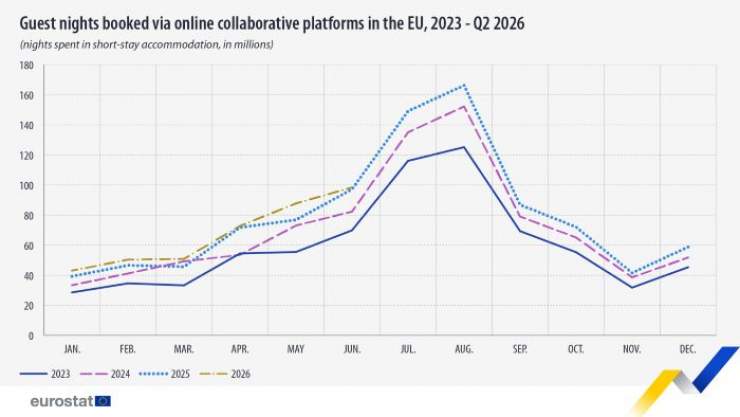
Between April and June (Q2) of this year, tourists spent 258.8 million nights in EU short-term rental accommodation booked through Airbnb, Booking, or Expedia.
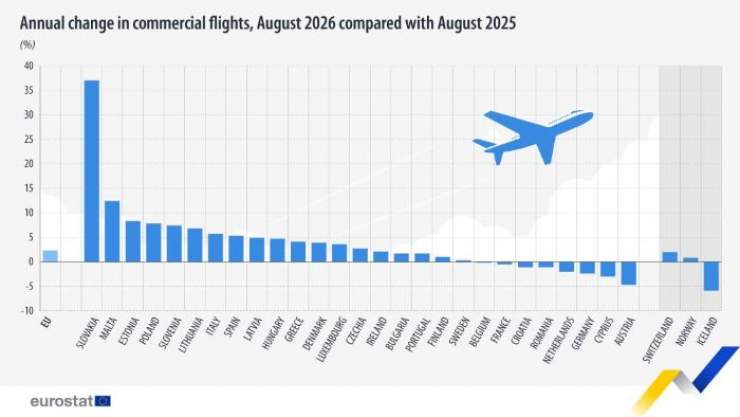
Eurostat has recently announced that between June and August 2026, there were more than two million commercial flights in the EU.
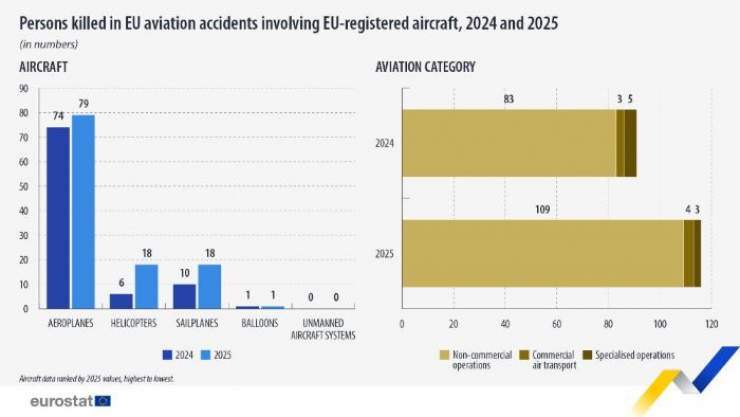
In 2025, 116 people deceased due to air accidents in the EU involving an EU-registered aircraft, 25 more than in 2024 (91). Since 2021, in total 638 departed in aviation accidents across the EU territory involving EU-registered aircraft.
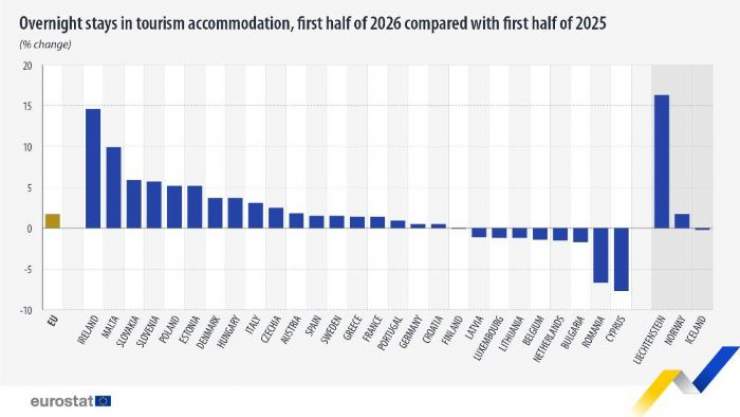
In the first half of this year, there were 1,321 million overnight stays in tourist accommodations across the EU, a 1.7 percent increase compared with the first six months of 2025, (1,299 million).
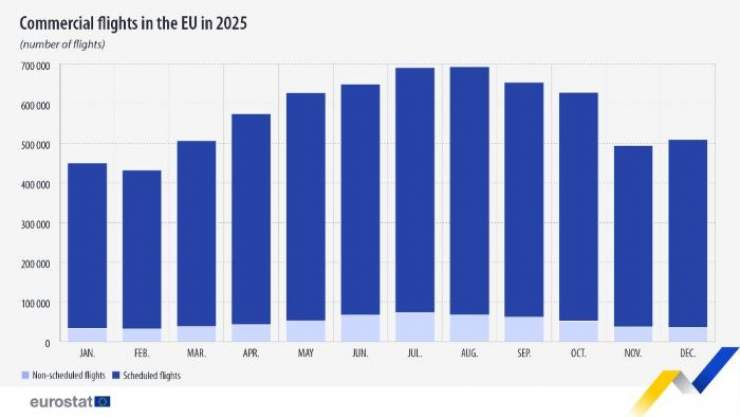
In 2025, 6.9 million commercial flights were recorded in the EU, an increase of 3.8 percent compared with 2024 (6.7 million). The number of flights has risen continuously since 2021 and, by 2025, had returned to a level similar to the pre-pandemic figure of seven million recorded in 2019.

According to Eurostat, in 2025, 27.5 percent of the EU’s population aged 16 or older were unable to afford one week of annual holidays away from home. This share increased by 0.5 percentage points (pp) compared with 2024, but it is significantly lower (by 7.7 pp) than a decade ago, in 2015.
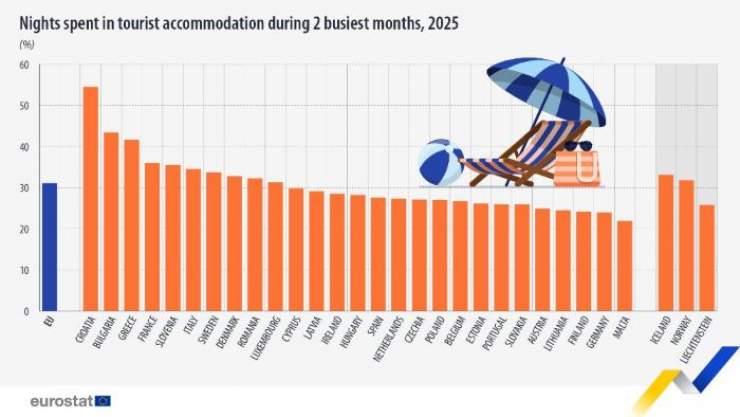
In 2025, 31.1 percent of all overnight stays in tourist accommodations across the EU took place during the two busiest months; in all EU countries these were August and July. The seasonality of tourism is driven by environmental factors, such as climate conditions and geographical location, together with social and cultural influences, such as school holidays.
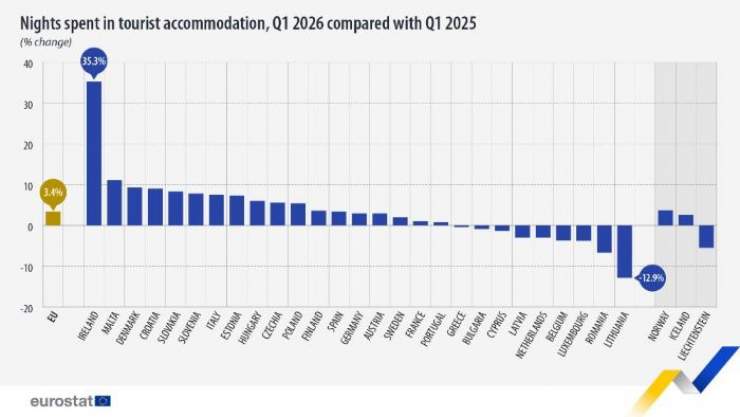
In the first quarter of 2026, there were 471.1 million overnight stays in tourist accommodations across the EU, marking an increase of 3.4 percent compared with the same quarter of 2025. January recorded 143.5 million nights (+3.2 percent compared with January 2025), February 154.4 million (+3.4 percent) and March 173.2 million (+3.7 percent).
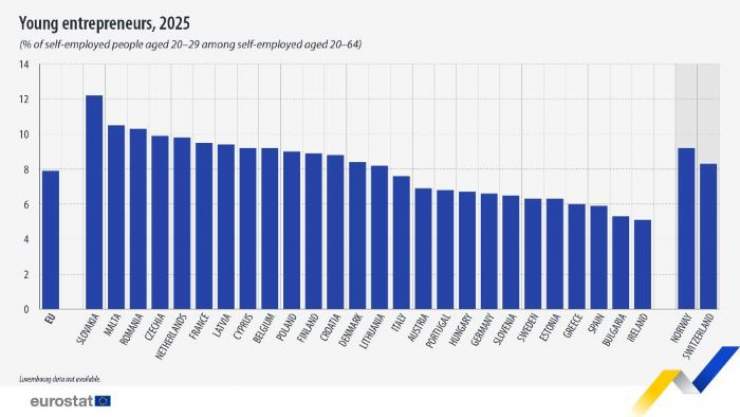
As technology reshapes workplaces at an unprecedented pace, some young people are finding their own ways to make a living, turning to self-employment out of creativity and innovation or necessity.
- Most Read