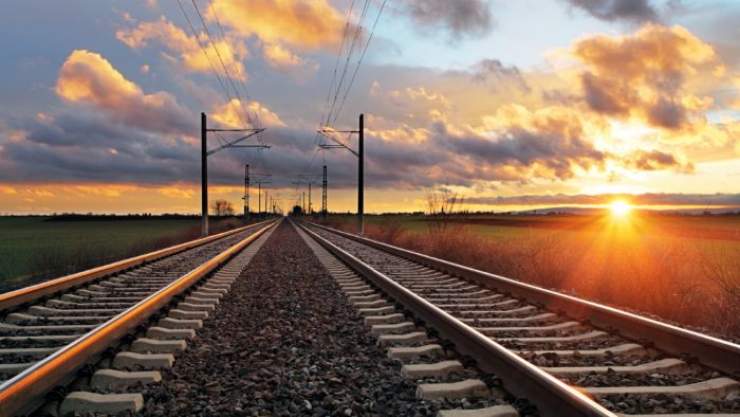

The total length of the railway network in the EU was 201 314 km, a decrease of 8.7 percent compared with 1990 (220 420 km).
However, there was a considerable increase in the share of electrified railway lines over this period with a 57.6 percent share in 2024 compared with 39.9 percent in 1990.
Among EU countries, higher density of railway network can be found in the high population areas with relatively high volumes of freight transport. Czechia had the highest railway network density in 2024 with 123.2 m of railway lines per km2 of land area, ahead of Belgium (118.7 m/km2) and Germany (110 m/km2). The lowest densities were found in Greece (14 m/km2), Finland (19.4 m/km2) and Sweden (26.8 m/km2).
Luxembourg: The only Country ‘on track’ with the European Train Control System
The European Train Control System (ETCS) is an effective safety measure to reduce train collision risks through track-based or radio signals. In 2025, according to the European Union Agency for Railways (ERA), Luxembourg was the only country which was fully equipped with ETCS, ahead of Belgium (90.3 percent of its railway lines) and Denmark (51.6 percent), while the least equipped countries were Hungary (1.6 percent), Croatia (3 percent) and Germany and Romania (both 3.2 percent).