


In 2021, residents of the 27 EU Member States made 879 million tourism trips with at least one overnight stay (+23 percent compared with 2020; 713 million trips).

As a probable reflection of the COVID-19 pandemic's impact on people’s lives, data on overall life satisfaction in the EU show that in 2021, EU citizens were slightly less satisfied with their lives than in 2018.

Most tourism destinations in the EU are mainly visited during specific months of the year. Very often, demand is strongly concentrated on just a couple of months, mainly during the summer.
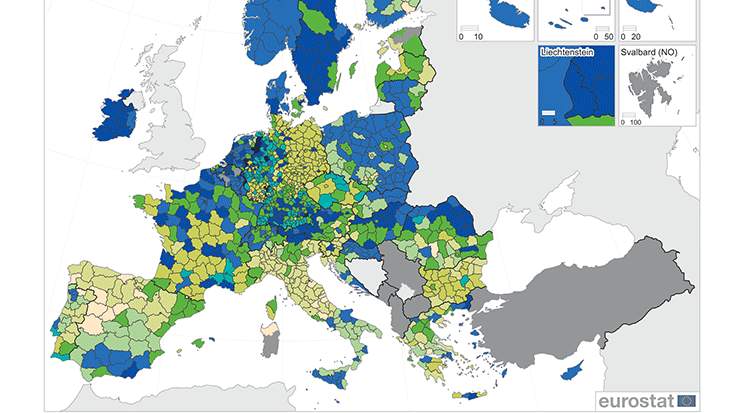
As of January 01, 2021, young people (aged 15–29 years) made up some 16.3 percent of the EU’s total population.
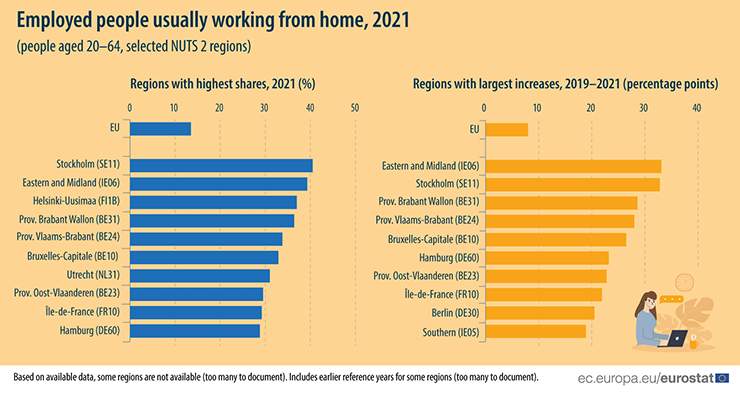
During the COVID-19 crisis, a large proportion of employed was faced with changing patterns of work – including working from home. In 2019, approximately one in 20 (5.5 percent) employed people aged 20–64 years in the EU usually worked from home.
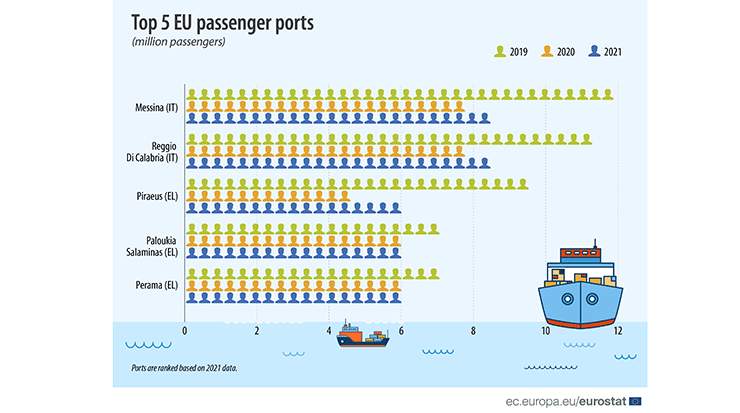
Following a significant 45 percent fall in the number of passengers embarking and disembarking in EU ports in 2020 (compared with 2019), 2021 was more positive, with data showing a partial recovery.

To mark World Honey Bee Day on August 20, the opportunity was taken to highlight the most recent data on the international trade of honey.

New research has revealed that the most affordable European city break for couples is Warsaw in Poland. The average cost for a two-day vacation for two people in Poland’s capital city is GBP426.

In January of this year, compared with December 2021, seasonally adjusted production in the construction sector increased by 3,9 percent in both the euro area and the EU, according to first estimates from Eurostat, the statistical office of the European Union. In December 2021, production in construction fell by 1,5 percent in the euro area and by 1,2 percent in the EU.

After months of refraining from travelling, also due to restrictive measures to prevent the spread of COVID-19, rail passenger transport is getting back on track. In the third quarter (Q3) of 2021, the rail sector in the EU is recording a significant increase in terms of passengers.
- Most Read