
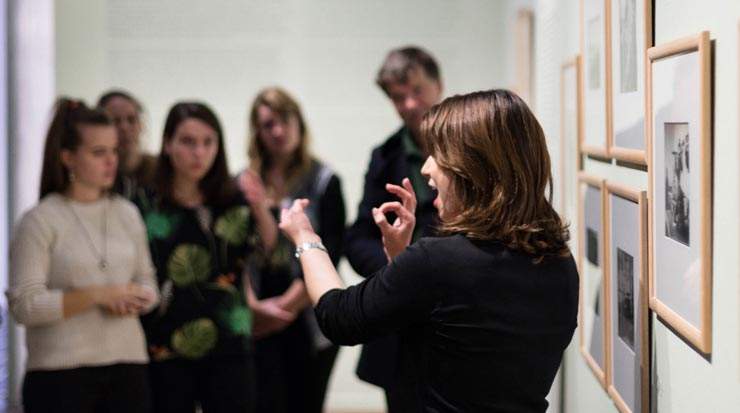

Only then does one really realise that Cyprus is seriously lagging behind in both the relevant infrastructure and in the proper training of the personnel of the tourism industry in this field.
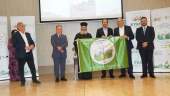
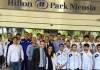
The experimental workshop was recently held as part of a two-day meeting of Erasmus + program partners on ‘Tourism for people with sensory disabilities’ in which the Larnaca Tourism Board participated. The meeting was also attended by specialised people in the subject matter of the project in order to obtain expertise to make the relevant recommendations and remarks.
Despina Ioannou, president, Federation of the Deaf, Cyprus, spoke about the serious accessibility problems of people with hearing loss in tourist spots. Even though the Cypriot Sign Language was recognised by the Cypriot Parliament as the official language of the Deaf Community in 2006, after so many years nothing has changed.
On airplanes, for example, most information is still verbal, hotels do not have specially lit bells or cameras or other means of communication in the rooms, museums and archeological sites do not have enough written information or screens with subtitles while on the beaches non-existent way of communication in case of emergency. This makes it difficult for the people in question to have a carefree vacation.
‘Access to culture is a human right’ remind the teachers of the School for the Blind, Maria Kyriakou and Christina Iliadou, and with this reasoning their school, in collaboration with the Cyprus Department of Antiquities, adopted a remarkable programme to make the archeological sites of Cyprus accessible for people with visual impairments.
Until now, the programme was implemented in the ‘House of Dionysus’ and the ‘House of Eustoli’ and will be followed by the Neolithic settlement of Choirokoitia. The implementation of the programme includes placement of bilingual signs and printing of information material in Braille, placement of relief plans, maps and three-dimensional models of spaces and construction of a mosaic model with uneven colored surfaces. An important parameter is the appropriate training of the staff of the archeological sites and the guides.
Accessible Cyprus Travel, is the only specialised inbound travel agency for the disabled, and the owner Stella Gabriel and her associates have specialised in offering programmes and services to these groups throughout their stay in our country. This office has also served several groups of blind people from abroad who enjoyed various activities on our island, such as pottery, tasting wine and other local delicacies, walking on nature trails, horseback riding, and even diving.
One of the few companies in Cyprus that has adopted practices for people with sensory disabilities is the management company of Larnaca and Paphos airports Hermes Airports. Thekla Georgiou, PRM & customer care officer, explained how they ‘guide’ their passengers with care and respect and presented the accessible services they have for the blind, such as, among others, the guide for the blind and the electronic devices Room Mate for the disabled. Also, in the electronic Help Points and in the BorderXpress Kiosks of the airports there are keys in braille writing while in the respective points there is also a video for people with deafness.
After 96 attempts to find a job without success, Andreas Vassiliou, who is diagnosed with quadriplegia, did not give up and created his own startup. The new project, which will be launched next September, is called Ablebook and covers the needs of people with disabilities and those who belong to vulnerable groups of the population. The app will provide complete information through an interactive map for accessible points and businesses in Cyprus, with the possibility of rating the services they offer for the disabled.